Commercial Epoxy Flooring in the Illawarra
Hard-wearing, easy-clean floors for shops, clinics, gyms, kitchens and showrooms, with the work planned around your business. Tell us about the site and we’ll arrange a free quote from an independent local contractor.
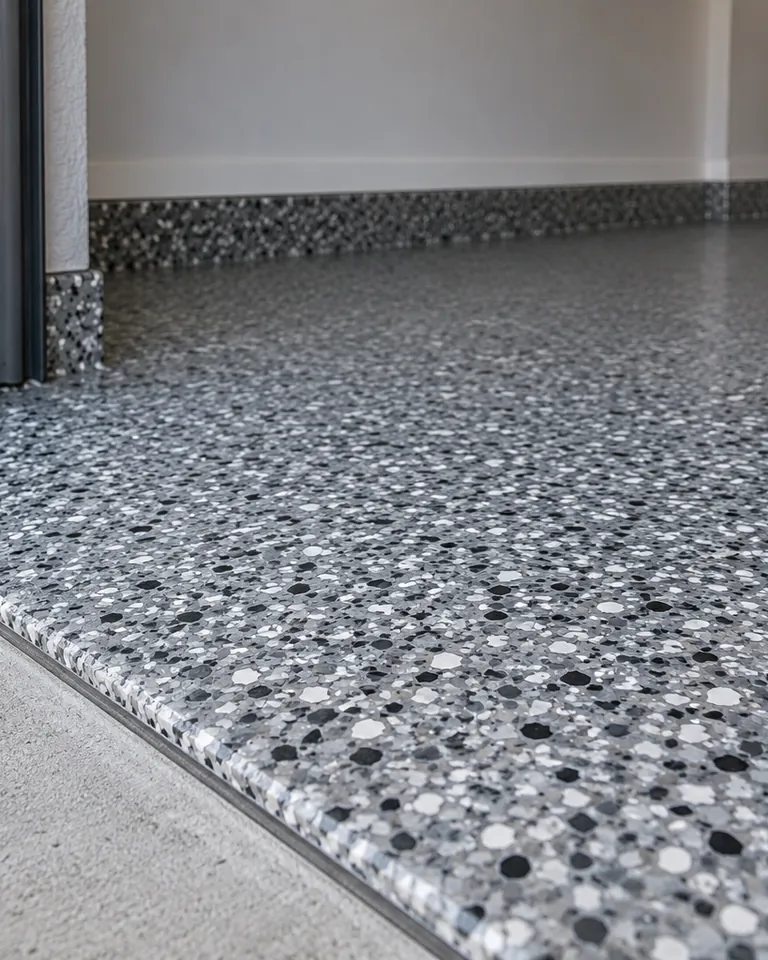
- Free quotes
- Staging and after-hours work discussed
- Slip resistance matched to the space
Where commercial epoxy works well
From Wollongong CBD shopfronts to clinics in Shellharbour and showrooms in Unanderra, commercial floors need to look tidy, clean easily and cope with steady foot traffic.
Good for
- Retail shops and showrooms
- Medical, dental and allied health clinics
- Gyms and fitness studios
- Commercial kitchens and food areas, with a suitable system
- Offices, back-of-house areas and storerooms
- Car showrooms and service reception areas
Problems it fixes
- Dusty, stained or patchy concrete that looks tired to customers
- Floors that are hard to mop and keep hygienic
- Worn paint or old coatings lifting at entries and traffic lanes
- Slippery areas near entries, sinks and wash-down zones
- Cracked and chipped slabs left by previous fit-outs
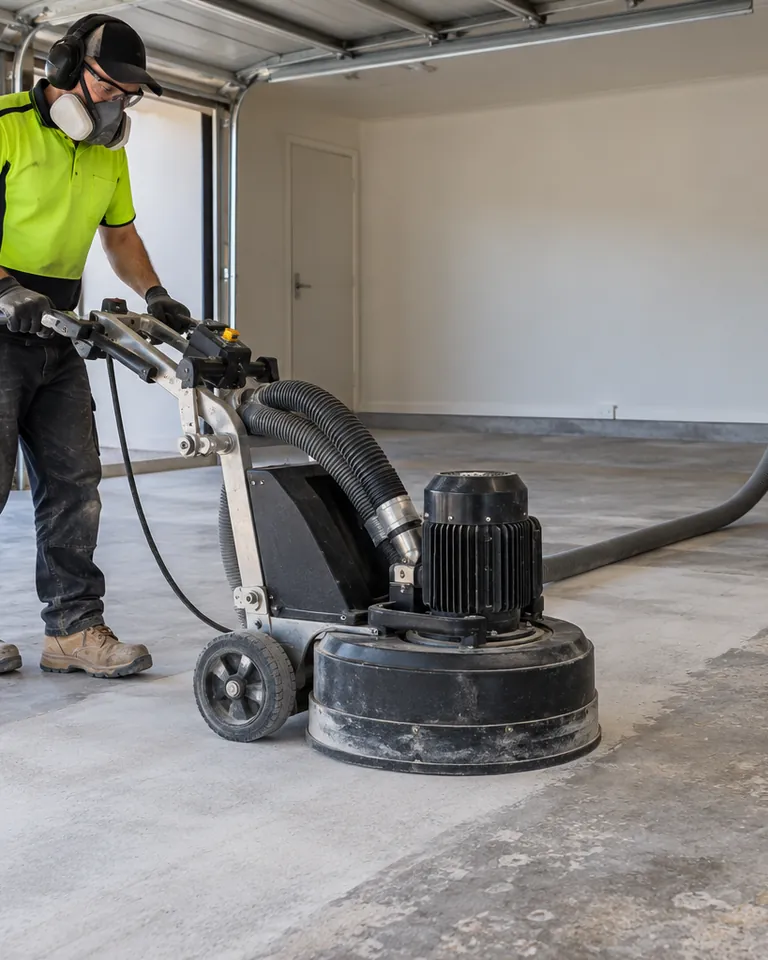
Preparation without shutting the business
Commercial slabs often carry old adhesives, sealers, tile or vinyl residue, and patch repairs from previous fit-outs. These need to come off, and the concrete needs to be ground back, before any coating goes down.
Ask the contractor how they will control dust and odour, whether the work can be staged in sections, and whether a low-odour or fast-curing system suits your site.
Concrete grinding and preparation · Repairs and coating removal
Commercial floor systems
The right system depends on foot traffic, cleaning, chemicals and how long you can close. Ask the contractor which one they propose and why.
| Finish | Looks like | Suits | Worth knowing |
|---|---|---|---|
| Solid-colour epoxy | An even colour with a gloss or satin topcoat | Clinics, offices and storerooms | Clean, simple look; an anti-slip additive is often recommended in wet areas |
| Flake epoxy | Coloured flake over a solid base | Shops, gyms and showrooms | Hides wear and marks between cleans, and adds some texture |
| Fast-cure systems | Clear or coloured, similar look to epoxy | Sites that can only close briefly | Polyaspartic and similar systems can cure faster and resist UV, but usually cost more |
| Hygienic systems | Thicker seamless coatings, often with coved edges | Commercial kitchens and food areas | Must suit the food safety requirements for your business; confirm with the contractor and your council or auditor |
How commercial jobs are usually run
Small shops and clinics can often be done over a weekend or a few nights. Larger sites are usually staged so part of the floor stays in use. The contractor will confirm a schedule with you.
Cure times
Many systems take light foot traffic within about a day, and full chemical resistance takes longer. Fast-curing systems can let you reopen sooner. Ask for the reopening time in writing before you book.
- Site visit and plan. The contractor checks the slab, measures up, and agrees staging and access.
- Clear and protect. Furniture and stock are moved, and nearby areas and equipment are protected.
- Grind and repair. Old coatings and residue come off, and cracks, joints and edges are repaired.
- Coating system. The base, finish and topcoat of the agreed system are applied.
- Cure and reopen. The area stays clear until it is ready for foot traffic and equipment.
What a commercial coating does well
- A seamless surface that is easy to mop and keep clean
- Resists spills, oils and most cleaning chemicals
- A brighter, more professional look for customers
- Slip resistance can be matched to each area
- Can include line marking, zones or a brand colour
Worth knowing
- The floor has to be closed while it cures
- Wet and food areas need the right system and slip resistance, not a garage coating
- Moving cracks and expansion joints need proper detailing
- Sun-exposed entries need a UV-stable topcoat
What affects the price
Commercial floors are priced on the site. These are the main factors.
- Floor area and layout
- Removing old tiles, vinyl, adhesives or coatings
- Slab condition and repairs
- The system, thickness and slip resistance needed
- After-hours or staged work
Keeping a commercial floor in good shape
Sweep or dust mop regularly and mop with a cleaner the contractor recommends for the coating. Entry mats trap grit before it reaches the floor, and protective feet under chairs, racks and equipment prevent scratches.
Busy commercial floors eventually need a fresh topcoat in traffic lanes. Ask the contractor how and when that can be done without a full recoat.
Related services
Commercial floor quotes across the Illawarra
Surrounding areas on request.
Commercial floor questions
Can the work be done after hours?
Many contractors can stage the work or do it on nights and weekends to reduce downtime. Mention your trading hours in the form and the contractor will discuss the options.
How long will the floor be out of action?
It depends on the size, the preparation and the system. Small areas may be done over a weekend, larger floors are often done in stages, and fast-curing systems can shorten the closure.
Is epoxy suitable for a commercial kitchen?
It can be, with a system designed for hot water, cleaning chemicals and food areas, usually with coved edges. Check the requirements for your business with your council or food safety auditor, and with the contractor.
How slip resistant is a commercial epoxy floor?
It depends on the finish and any aggregate added. For areas that need a specific rating, ask the contractor which system and texture they propose and whether it has been tested.
Will there be a strong smell?
Some systems give off an odour while they are applied. Ask about low-odour options if the building stays occupied.
Can epoxy go over existing tiles or vinyl?
Usually not. Tiles, vinyl and adhesives are normally removed and the slab ground back so the coating bonds to the concrete.
Get a quote for your commercial floor
Tell us the type of business, the suburb, the approximate floor area and when the space could be closed. Photos help the contractor plan the job.
Get a free quote
Four details are all we need to get started. We’ll pass your enquiry to one independent local contractor, who will contact you to arrange your quote.